
You don’t need to throw everything out to feed your kids better.
In fact, the idea that you need a full pantry purge is one of the biggest reasons parents feel stuck. It’s overwhelming, expensive, and unsustainable — and it often leads to doing nothing at all.
The truth is much simpler: better next choices matter more than perfect ones.
Small swaps — made consistently — change how kids feel, how parents shop, and how food fits into everyday life. No drama. No food fights. Just progress.
Why Swaps Work (When Overhauls Don’t)
Kids rely on familiarity.
Parents rely on routines.
When we make drastic changes, kids push back and parents burn out. But swaps work with the nervous system, not against it. They preserve what’s familiar while quietly increasing nourishment.
Think: “let me get something in the same category, but a slightly better option.”
Here are real-life swaps that families can start using today.
1. Flavored Yogurt → Plain Yogurt + Toppings
Many flavored yogurts are marketed as “healthy,” but they often contain more sugar than a dessert.
The swap:
Choose plain yogurt and let kids build their own bowl.
Add:
Fresh fruit
A drizzle of local honey or maple syrup
Chia seeds, granola, or nut butter
This turns yogurt into an interactive, nutrient-dense snack — and kids are more likely to eat what they help create.
My go-to yogurts:
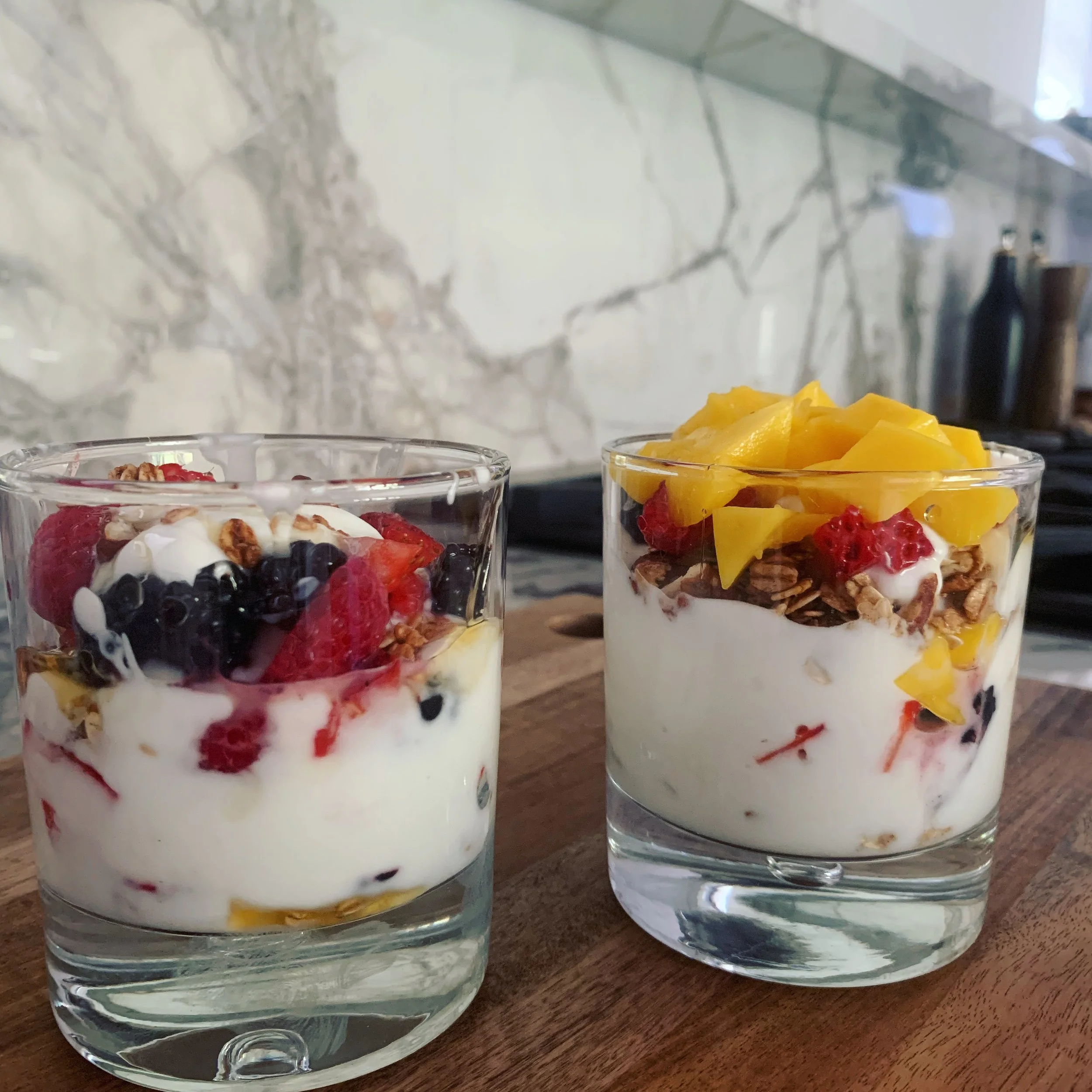
Swap flavored yogurt with plain yogurt + toppings!
Get all these ideas and more on our Instagram page.
2. Conventional Chips → Minimal-Ingredient Chips with Better Oils
Chips don’t have to disappear — they just don’t need to be ultra-processed.
The swap:
Look for chips with:
A short ingredient list
Oils like olive oil or avocado oil
No artificial flavors or dyes
Favorites:
Trader Joe’s Kettle Cooked Potato Chips with Olive Oil
Same crunch. Fewer inflammatory oils. Better next choice.
3. Sugary Ice Cream → Fewer-Ingredient Ice Cream
Ice cream is part of childhood — and it should stay that way.
The swap:
Choose brands with simple ingredients: milk, cream, sugar, eggs.
Better options:
This keeps dessert joyful while reducing unnecessary additives.
4. Soda & Sports Drinks → Coconut Water or Kombucha
This one surprises parents — but kids are often more open than we expect.
The swap:
Instead of soda or neon-colored sports drinks, try:
Coconut water (the Kirkland / Costco brand refrigerated coconut water — the purple one — is a favorite in our house)
Watermelon juice (Literally, just add watermelon to a blender and blend! Super delicious and super easy.)
Blue Stripes Cacao Water (the Mango one is the bomb!)
Kombucha (Health-Ade is a go-to)
Yes, kombucha. My son loves it.
Kids’ taste preferences are shaped by exposure. Sometimes they surprise us — especially when drinks aren’t framed as “healthy” replacements, just something new to try.
Mama Bear Tip! Want a low-pressure way to introduce new foods? Samples. Yes, those samples — Costco, farmers’ markets, anywhere they’re offered. This little hack has made a big difference in what my son is willing (and excited) to eat. I think it’s just the simple fact that someone else (not me) is offering the food. This is where his love for kombucha came to life!
5. Sugary Breakfasts → Balanced, Real-Food Mornings
Breakfast is one of the easiest places to make a meaningful swap.
The swap:
Move away from sugar-heavy breakfasts toward options with protein, fat, and fiber:
Eggs and toast
Yogurt parfaits with fruit and seeds
Sausage and fruit
Almond butter toast
Smoothies - click here for our go-to chocolate smoothie recipe!
These choices support steadier energy and fewer mid-morning crashes — especially on school days.
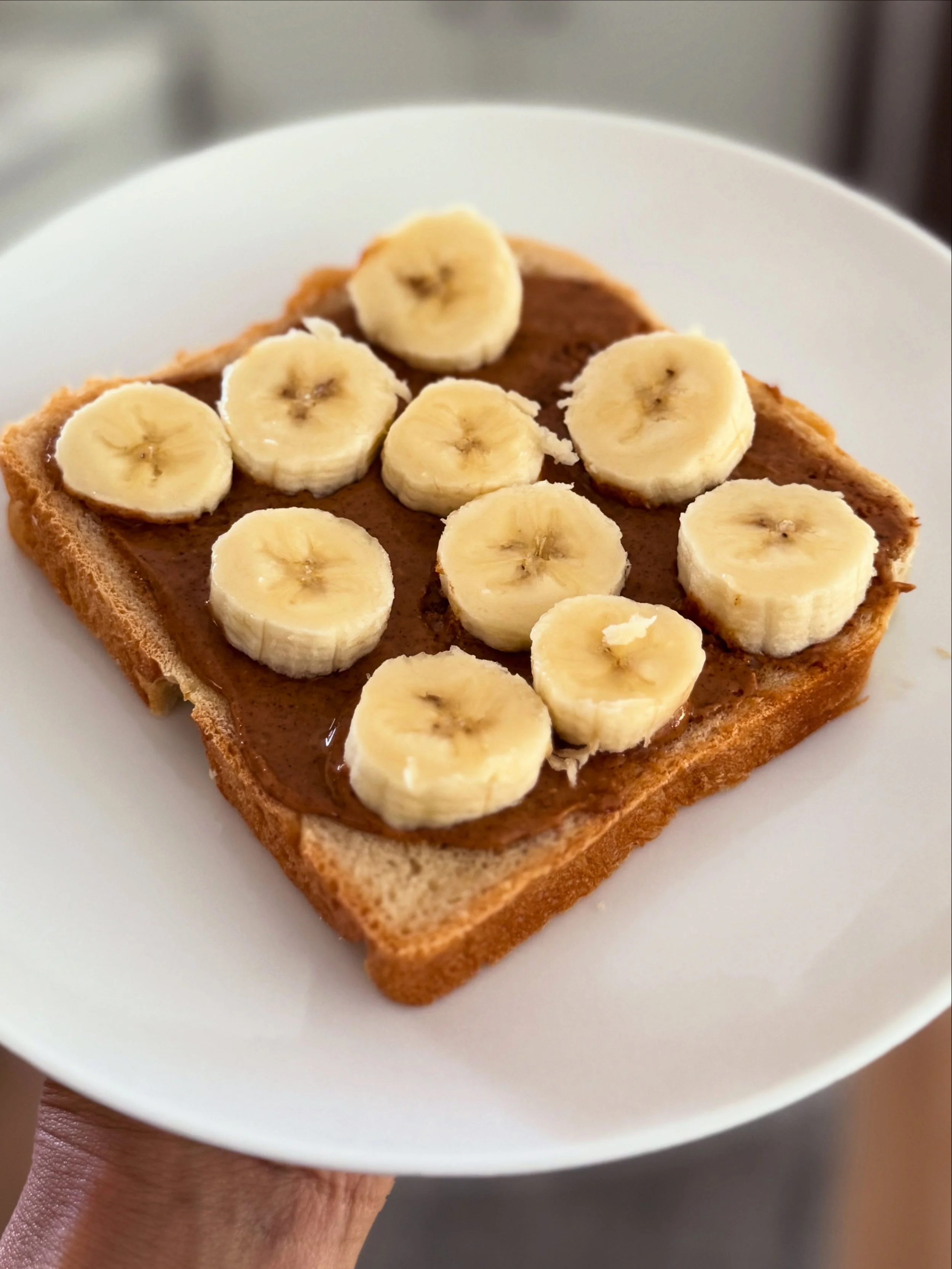
Almond butter toast - for those mornings when you’re short on time (or want to go back to bed)!
Feeding our kids healthy foods should not feel like a chore! Follow our Instagram for more food tips like this.
6. Packaged Snacks → Fruit + Something Filling
Instead of relying solely on packaged snacks, try pairing:
Fresh fruit + nuts or nut butter
Apple slices + cheese
Beef stick + crackers
Hummus + veggies
This keeps snacks satisfying and helps prevent blood sugar spikes that lead to meltdowns later.
What to Look for on Labels (Without Overthinking It)
You don’t need to become a label detective.
A few simple rules go a long way:
Fewer ingredients is usually better
Avoid “natural flavors” — if it doesn’t clearly say what it is, it’s likely highly processed
If it sounds like a chemical, it probably is! And, your body probably doesn’t need it. Examples include carrageenan, aspartame, titanium dioxide, citric acid (yes, a chemical!), and sodium nitrate.
This isn’t about fear. It’s about clarity.
Go at Your Family’s Pace
You don’t need to change everything at once.
Try this instead:
Make one small change per month
Let it become normal
Then move on to the next
Over time, these swaps become habits. Shopping gets easier. Kids adapt. Confidence grows.