
When we talk about kids and food, we usually focus on growth: height, weight, calories, vitamins.
But food affects far more than physical development.
What kids eat impacts their mood, energy, focus, sleep, and emotional regulation — sometimes within minutes, sometimes over time. And for many families, this connection shows up not at the dinner table, but in the classroom, on the playground, and during those after-school meltdowns that seem to come out of nowhere.
This is not about blaming parents.
It’s about understanding what’s really going on.
We Eat With Our Brains First
Eating doesn’t start in the stomach.
It starts in the brain.
Before a single bite is taken, the nervous system is already involved — reading cues about safety, stress, and environment.
That’s why how we eat matters just as much as what we eat.
When mealtime feels rushed, tense, or chaotic, the body stays in a stress response. Digestion slows. Blood sugar regulation becomes less efficient. Kids are more reactive, less regulated, and more likely to resist food.
This is why calm matters.
Here are a few simple things you can do before and during mealtime to help your kids’ nervous system…
Take a deep breath before eating.
Say a prayer before eating, or give thanks to whoever brought this meal together.
Create a dinner-time ritual. We like to go around and say “the three things that made us happy today”.
Gratitude, prayer, or a moment of gratitude helps shift the nervous system out of fight-or-flight mode and into rest-and-digest mode. And that’s when food can actually do its job!
Real Food vs. the Packaged Illusion
We live in a world where food marketing is louder than ever.
Bright packaging, health claims, cartoon characters, and buzzwords convince parents that ultra-processed foods are just as good — or even better — than real food. Spoiler alert - they’re not!
Most packaged foods are designed for shelf life and profit, not nourishment.
That doesn’t mean packaged foods are “bad.”
They’re fine in a pinch.
But when they become the foundation of a child’s diet, we see the consequences.
Ultra-processed foods are often:
Low in fiber
High in refined sugars and starches
Designed to be hyper-palatable and easy to overconsume
Real food looks different:
Fruits and vegetables
Eggs, yogurt, meat, nuts, seeds
Simple meals made from recognizable ingredients
Eating “the aisle” doesn’t mean perfection. It means choosing foods that look like they came from somewhere real — and letting packaged foods play a supporting role, not the lead.
Here are some easy things you can do as a family to make real food fun:
Plant a cherry tomato plant.
Pop popcorn on the stove.
Let the kids make their own smoothie creation.
Real food can be delicious AND fun!
Blood Sugar, Breakfast, and the School Day
One of the most overlooked contributors to kids’ behavior and focus is blood sugar stability, especially at breakfast.
A typical American breakfast — pastries, sugary cereal, toaster treats, sweetened drinks — is high in refined carbohydrates and low in protein, fat, and fiber. These foods digest quickly, causing blood sugar to spike and then crash.
Research has consistently shown that breakfasts high in added sugar are associated with:
Reduced attention and concentration
Increased irritability
Energy crashes mid-morning
When blood sugar drops, the brain perceives stress. For kids, that stress can show up as meltdowns, impulsivity, hyper-focus, or shutdown — behaviors that are often misunderstood in school settings.
Kids are not “bad.”
They’re under-fueled.
Here are a few examples of balanced breakfasts that help support stable blood sugar:
Eggs and toast
Yogurt (plain) parfaits with fruit and granola
Sausage and fruit
Almond butter toast
Smoothies with protein, fat, fiber, and carbs
And my son’s favorite - sliced bananas with almond butter and mini dark chocolate chips on top!
These meals provide steady energy and support focus throughout the morning — without the crash.
And yes, smoothies count. (I’ll link mine for you below.)
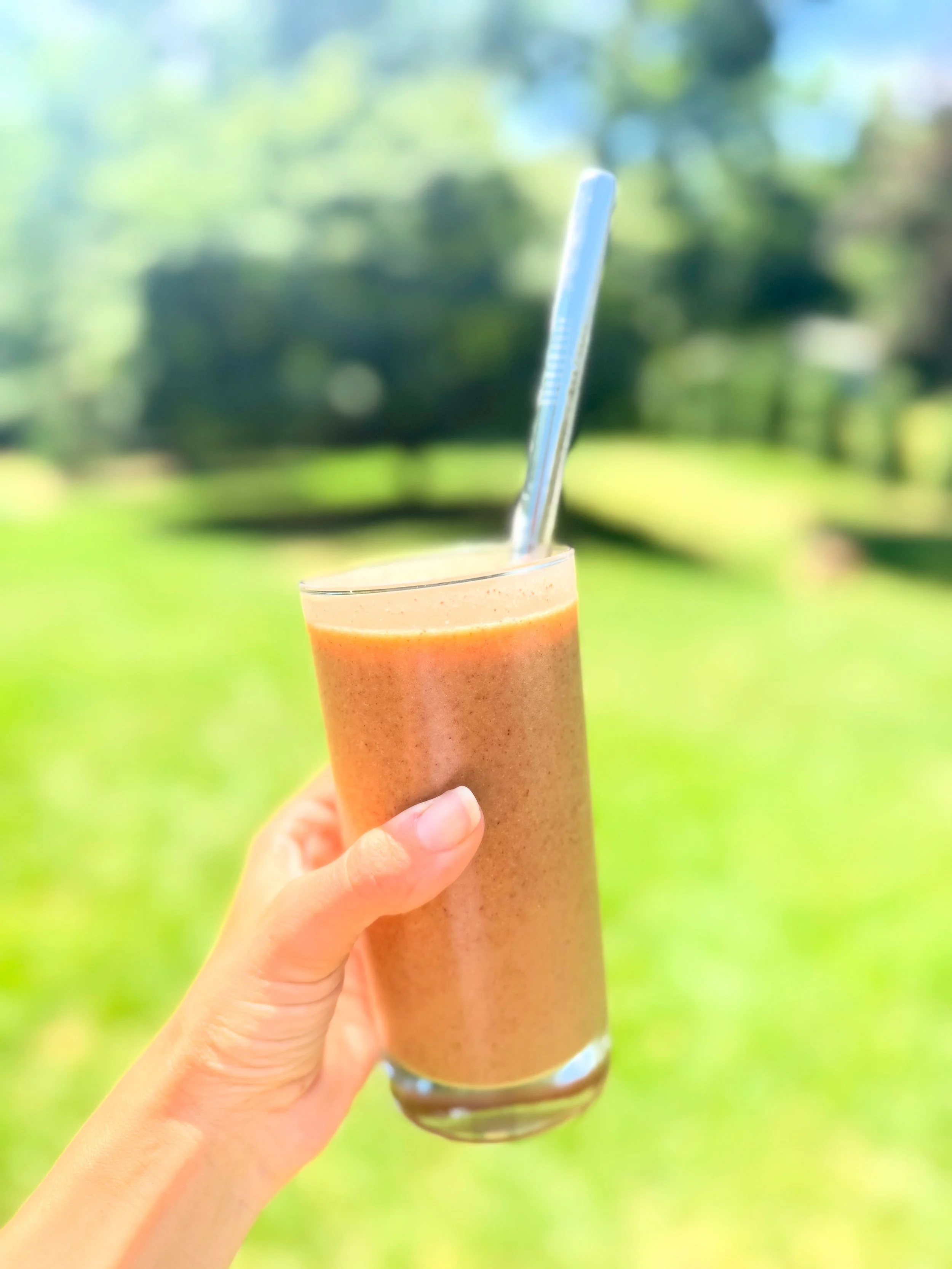
Get THE chocolate smoothie recipe!
Click here to go to the Instagram post with the full recipe.
When Food Gets the Blame — and Kids Get the Label
Too often, kids are labeled before food is questioned.
“Difficult.”
“Hyper.”
“Defiant.”
“Unfocused.”
But food rarely enters the conversation. Why?
The global ultra-processed food market is worth hundreds of billions of dollars, and children are one of its biggest targets. Marketing shapes taste preferences early, teaching kids to crave sweetness, crunch, and instant gratification.
When those foods dominate a child’s diet, their nervous system pays the price.
Instead of labeling kids, we can observe patterns:
How do they feel mid-morning?
What happens after certain snacks?
Do emotional crashes line up with long gaps between meals?
This isn’t about controlling kids with food.
It’s about supporting their bodies so regulation becomes easier.
Food deserves the side-eye — not the child.
The K Bear Foodie Perspective
K Bear Foodie isn’t about fear or food rules.
It’s about awareness.
It’s about real food over marketing noise.
It’s about calm nervous systems, steady energy, and kids who feel supported instead of misunderstood.
When we change how we fuel kids, we often change how they show up in the world.
And that’s powerful.